On Oracles & Elixirs
On the archetypal hero’s journey, there are three stages: departure, initiation and return. The main character must leave from whence they came, win wisdom in some way, and come back with an elixir in hand to share for the good of all.
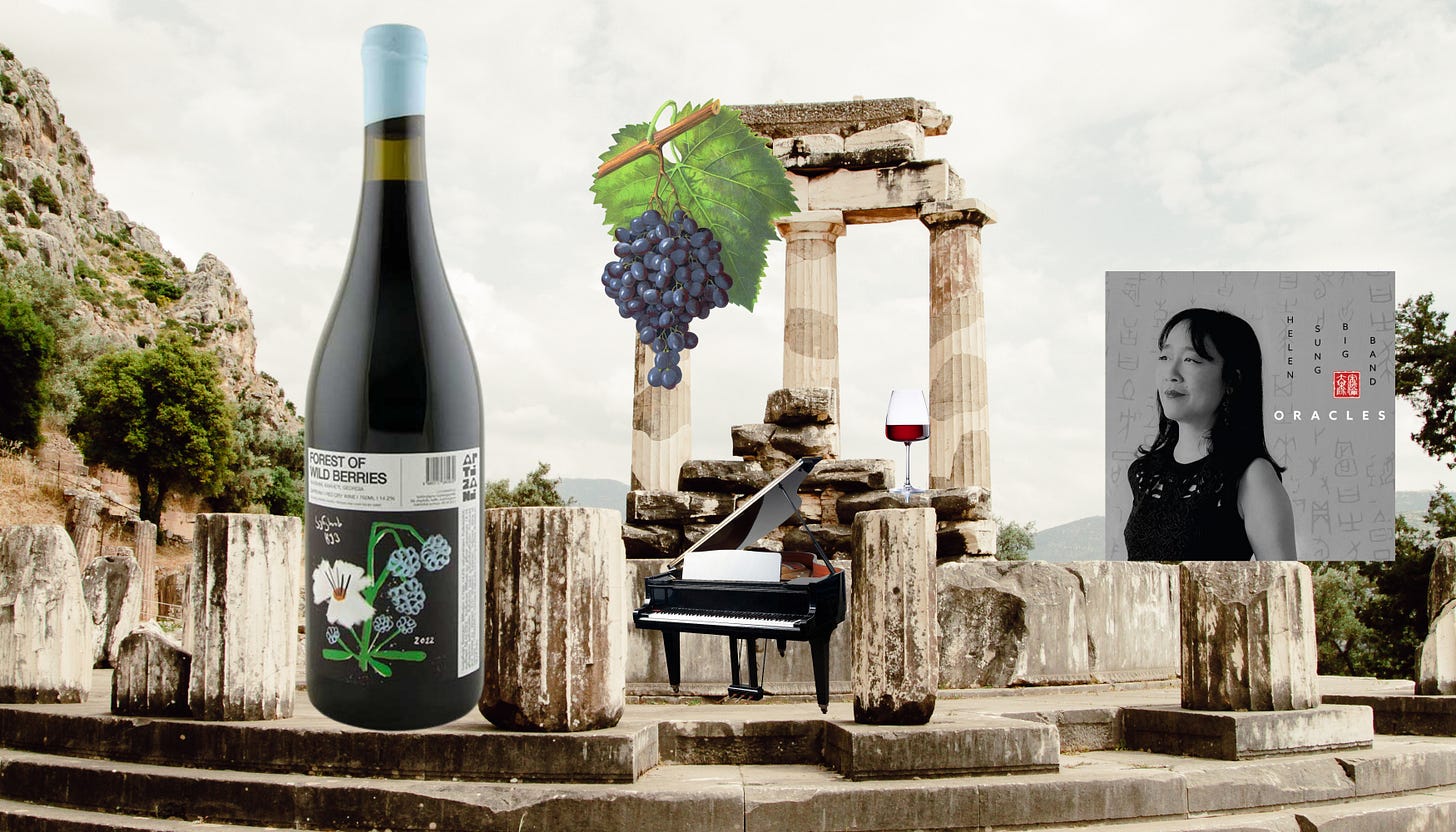
One pairing of sound and sense epitomizes the quest. An energizing rigor and sense of daring unite the latest album by pianist/composer Helen Sung and a red wine from Georgian producer Artizani that inspire us to be as intrepid as they are in our own voyages – heroic or otherwise.
Helen Sung departed from the classical music world to pursue jazz early in her career: the bridge between the two genres is treacherous given how much constriction and tradition is required in the former, and the freedom and invention the latter demands.
With that bridge well behind her, and a career now at full tilt, Sung’s latest, Oracles (Sunnyside, 2026), is a big band release that celebrates her constellation of mentors and influences while being entirely in her own exhilarating voice.
On the opening track, “Convergence,” she opens with an ancestrally evocative modal riff, underpinned by portentous bass register swells, then bursts into swinging improvisation. Sung amalgamates driving intensity, dense big-band writing, angular syncopation and soaring solos. The track is at once wild and technical, astonishing and propulsive.
Oceans away from the NYC jazz scene, a young trio of budding winemakers once set out from their native Georgia, whose wine culture is the most ancient and continuous in the world, to explore the winemaking techniques of Europe in order to return and make something utterly their own.
The Artizani three; Irakli Gvaramia, Salomé Andrazashvili, and David Mgeladze, set out not to dispense with tradition, but to invigorate the heritage of their native land and its fruits. At a time where the binary of adherence to old ways or total overstep into effacing globalizing influence seem like the only choices, they made a third road for themselves.
Any musician will tell you the notes you don’t play are as important as the ones you do, and Artizani makes bold choices in this regard; eschewing the Georgian UNESCO Heritage certified Qvevri (a behemoth underground clay vessel used to age the wine) for stainless steel — a decision that serves the energy of the grapes they work with.
Artizani’s flagship red, “Forest Full of Berries” 2022 is made of the native saperavi, a grape as intensely hued on the inside as on its skin. The fruit is sourced from three vineyards in the cool climate region of Kashmi in Kakheti, at the foot of the Caucasus Mountains. The brio and life of the fruit in the glass lives up to the wine’s name, further enhanced by an artistic label that could also double as an album cover.
With a crush of dense, brambly, inky dark fruit, it manages to be both intense – almost liqueur like – yet still deft and fresh, with aromas of mint and licorice. The ferocious zeal the wine embodies speaks both to the spirit of freedom and dedication to craft with which it was made.
Wine made with minimal intervention, like improvised music, can have a reputation for being unwieldy and undisciplined. Music that is free to the point of being shapeless, or grapes left to their own devices without proper care, may get lost (or lose us) on their journey. Arguably, there has to be an even more profound commitment to excellence if a winemaker, or a musician, dares to take risks.
Helen Sung stands on the shoulders of giants: her musical forebearers, including Herbie Hancock and Wayne Shorter, reverberate on her album. The Artizani trio craft saperavi wine, known folklorically as “the blood of giants” in a continuum of rich history. Both emerge far from the shadow of what came before, onto new terrain.
Back to oracles — the most famous one, at Delphi, was of course ruled by the Greek god Apollo. He did, however, take off winters, when Dionysus would reign in his place (and host some great parties). I’d like to think, if a priestess decided to do an extra prophesy in the off season in honor of the god of music and wine, she might have foretold a continued bright future for both our composer and winemakers, and certainly for those of us who get to revel in their art.