When I was 30ish, on a calamitous crest of more advanced adulthood, I became enamored with, and resolved to move to, New Orleans. I was in love with the city, its heavy air laden with music, mystery, and a way of life that seemed to loosen my wound-to-the-point-of-breaking threads. This plan went well past the casual stage, into details of a venture I planned to found there.
My plan, all the more intoxicating for its grandiosity, was to start a theater company with the name “Theatre Terroir”. The first season would have pieces that called upon the city’s ferment of culture, people and history, and it would be named for the wine term that evokes how place and climate combine to create an effect on what’s in the glass – a place that can be tasted.
I never moved, but did keep all the New Orleans repertoire in my songbook. I can’t say what would have become of this self should she have lived there, but I can say with certainty that I would not be the same. Places form people.
For the sake of this conversation, let’s say grapes have enough personality to count as people too. Grenache Blanc has a luxurious way about it — you feel it as much as anything, with a certain a weight and broad presence on the palate. It’s generous, and does marvelously with guests (other varietals in a blend). However, a low-ish acid grape such as this can mean wine made from it hazards being too soft. Easeful fruit can become blurry without enough acidic verve, or maybe becomes overshadowed by its companions in the bottle. Mellow, but susceptible. Laid back, with a risk of becoming laid out.
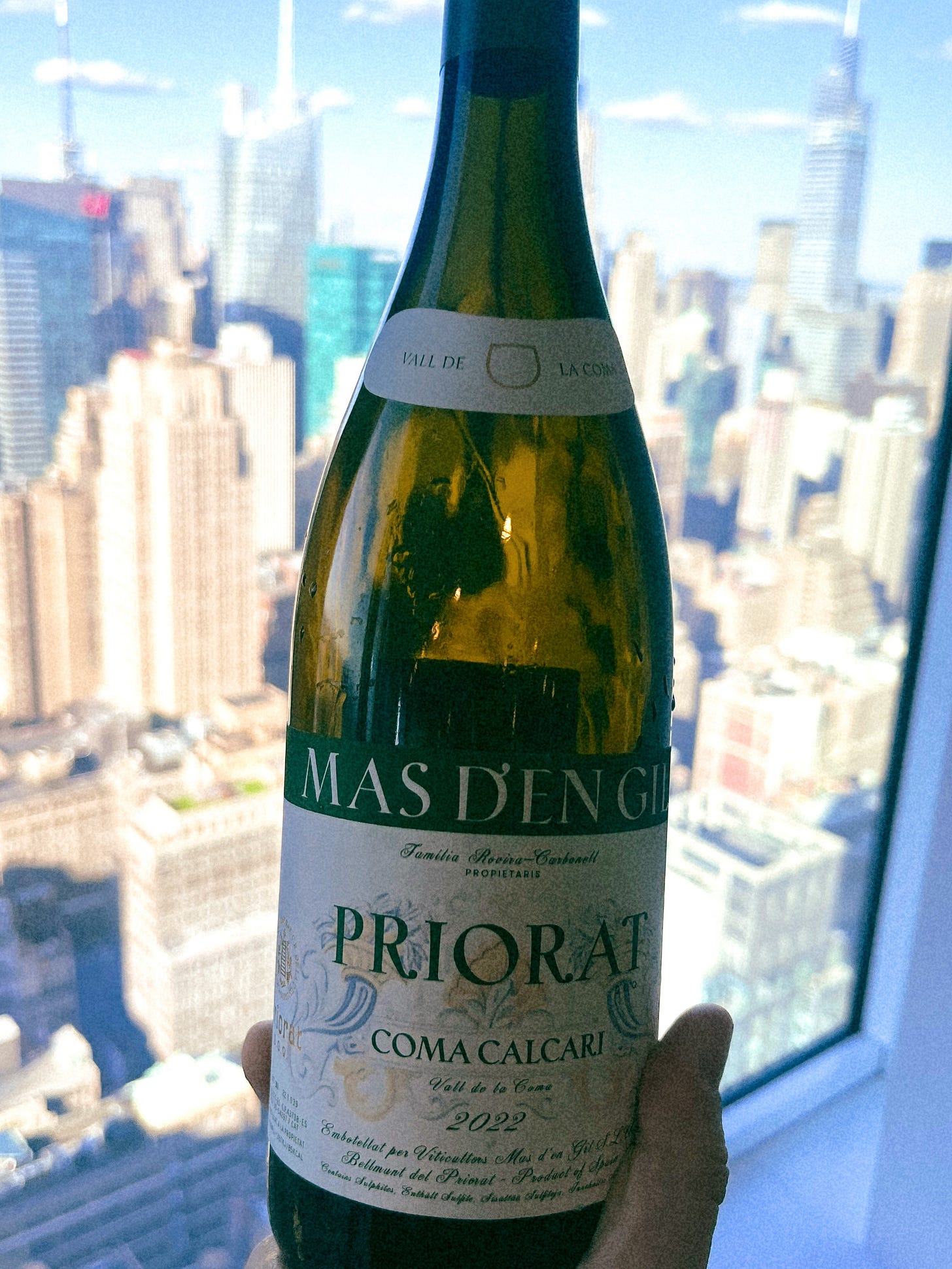
Now, when this grape is grown in the slatey, schisty dark llicorella soils of Priorat in Spain, we have the perfect balance of place and personality. The inhospitable soils require our usually relaxed friend to work harder for nutrients, to bear scanter fruit, and to concentrate its talents more compactly. Shifts from warm days to cool nights in the mountains force the grape to halt its ripening, letting the process of becoming catch up to itself.
In the beneficent struggle of growth, aided in no small part by expert winemaking that takes into account place and personality both, Mas d’en Gil’s Priorat blanco “Coma Calceri” ’22 shines. Viscous yellow delicious apple, ripe nectarine and melon flood the palate, offset with a well-tuned acidity that carries through a fine mineral quality. The structure and poise gives the fleshy fruit a discipline that tends to cause the imbiber to forget hers.
Music and musicians emerge from the soils in which they hail from no differently than grapes. The Great Migration meant that Black Americans, jazz musicians among them, sought freedom and opportunity away from the South: especially in cities such as Chicago, New York, and Kansas City.
Kansas City of the ‘20s and ‘30’s is the area that perks my interest as of late. Tom Pendergast, who essentially ran the town at this time, was outrageously corrupt and welcomed all kinds of shady businesses to flourish in town throughout the Great Depression — gambling, speakeasies, brothels, you name it. With that came an entire economy that ran on music that provided a soundtrack to sin all night long.
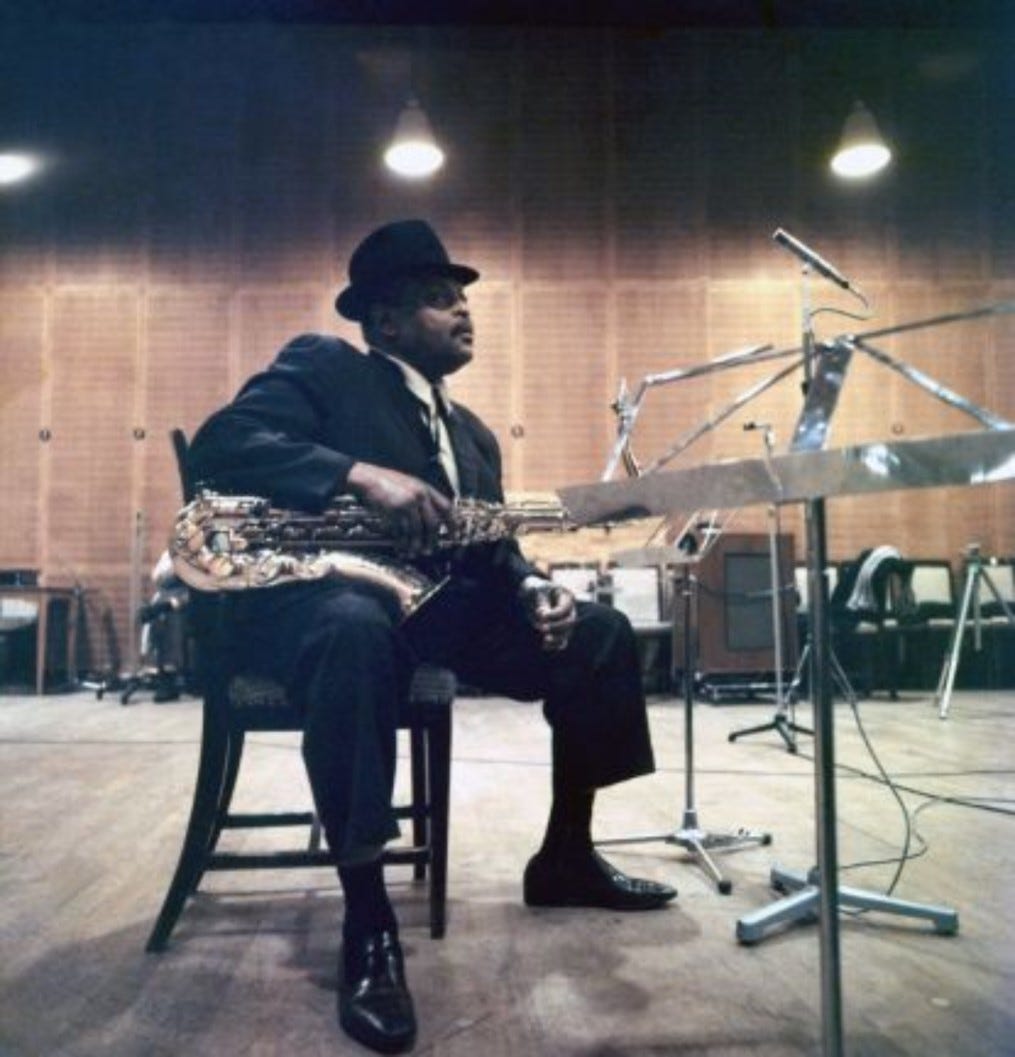
Sublunar revelry meant that riff-based composition flourished, and with it the open solo. The greats that emerged from Kansas City were masters of the art. The swing just hit differently from this city, and the blues infused everything. A short list of musicians whose work grew out of the city at this time says it all: Count Basie, Lester Young, Mary Lou Williams, and Ben Webster.
Webster’s sound on a ballad is utterly captivating: a spacious but full tone that trails off into pure breath and vibration. It’s easy to imagine a player like this succumbing to his own spell, becoming languid, cloudy and indulgent — but it doesn’t happen. His sound always serves the song, and the verve and rhythm native to the Kansas City sound helps give even a ballad a lift that keeps things energized.
On the fast tunes his power stays nimble, but It’s in his ballads I hear this tension most deliciously — it’s an easy sound to listen to for certain, but an insistence and sense of rhythm make his playing captivating.
Webster himself was known to overindulge in drink to deleterious effect - but when I listen to his sound, I never hear it.

If New Orleans would have loosened my threads, New York City continued to tighten them. A tauter string makes an instrument more resonant and clear, I tell myself, often one to push a metaphor to the breaking point.
To that end, I often thought of myself as a grape planted in inhospitable soil in New York City — having to work harder for sustenance, and struggle to produce. I suspect this has made my fruits sweeter, and perhaps helped to cultivate a certain piquant bitterness.
One of life’s arts is to make the right things easy and others a worthwhile struggle — and choosing the place that allows for that balance.
A toast:
May your struggles make you stronger, and may you harvest sweet fruit from challenge.
I'll be sending more musical news soon. In the meantime, thanks for reading.
Cheers,
Kristen